GEO Strategy for Local Search: 5 Ways Brands Can Maximize AI Coverage
What is Generative engine optimization — will it affect your current local marketing strategy? We’ve got you covered.


“For years we’ve focused on SEO, which was used to make sure your books have the right title, and they’re placed correctly on the shelves in this library so people can find it using a catalog, etc. Now, we have GEO. Instead of just finding your books on this shelf, you’re now using AI as a librarian and you’re asking it questions: ‘What’s the main idea in this book? How do I find this type of book that I'm looking for?’ AI reads the cover. It reads all the content. It reads the first chapter, the second, and the third, and it gives you a summary of everything that you're looking for based on what you prompted, what you’ve asked it, etc. So, GEO is about making sure your content is so clear, so structured, and authoritative that AI, the librarian, summarizes you accurately and favorably to the end user.”

Key takeaways:
- Brands need to track Share of Voice, Mention Rate, and Citation Rate with traditional rankings to understand how AI systems perceive and recommend them.
- The 5 focus areas that matter most for a GEO strategy are prompts, consistent and structured content, rich and fresh content, brand mentions, and ongoing GEO monitoring.
- GEO is a cross-functional opportunity for PR, social, brand, and sales teams to leverage AI-driven customer insights and convert high-intent consumers.
We’re at a turning point in how people find businesses and information online.
As we honor this AI search as a new discovery method, we need to establish how — if at all — this affects the ways in which SEOs optimize their websites and business profiles for online visibility.
Everyone’s talking (a lot more seriously now) about generative engine optimization, or GEO — and whether it will become the new battleground for businesses to compete for local customers.
One thing is clear: We need a grounded, actionable understanding of whether a GEO strategy means a complete departure from current SEO strategies. We need to help our clients with multiple business locations know how to respond.
Let’s talk about how we, as marketers and agencies, can lead the way.

What is Generative Engine Optimization (GEO)?
It’s been a full year since we launched our initial GEO course on the Uberall Academy. And in that short time, we’ve seen major developments in search — marketing teams rattled by them.
Many people are still asking “What is generative engine optimization?” — so, before taking you through your GEO strategy, let’s cover this question.
Local search is now about far more than just googling something nearby and clicking on a blue link. Discovery has moved to AI engines such as ChatGPT, Claude, Perplexity, and Gemini. It’s moved to visual searches through TikTok, Instagram, Pinterest, Reddit — and to voice assistants like Siri or Alexa.
Generative engine optimization (GEO) is the practice of influencing how AI engines include, describe, and recommend brands in AI answers rather than focusing on optimizing for clicks or rankings. Visibility — a key pillar of optimizing your locations’ performance — is still in some ways about ranking, but not by SERP position. Now it’s about metrics like Share of Voice.
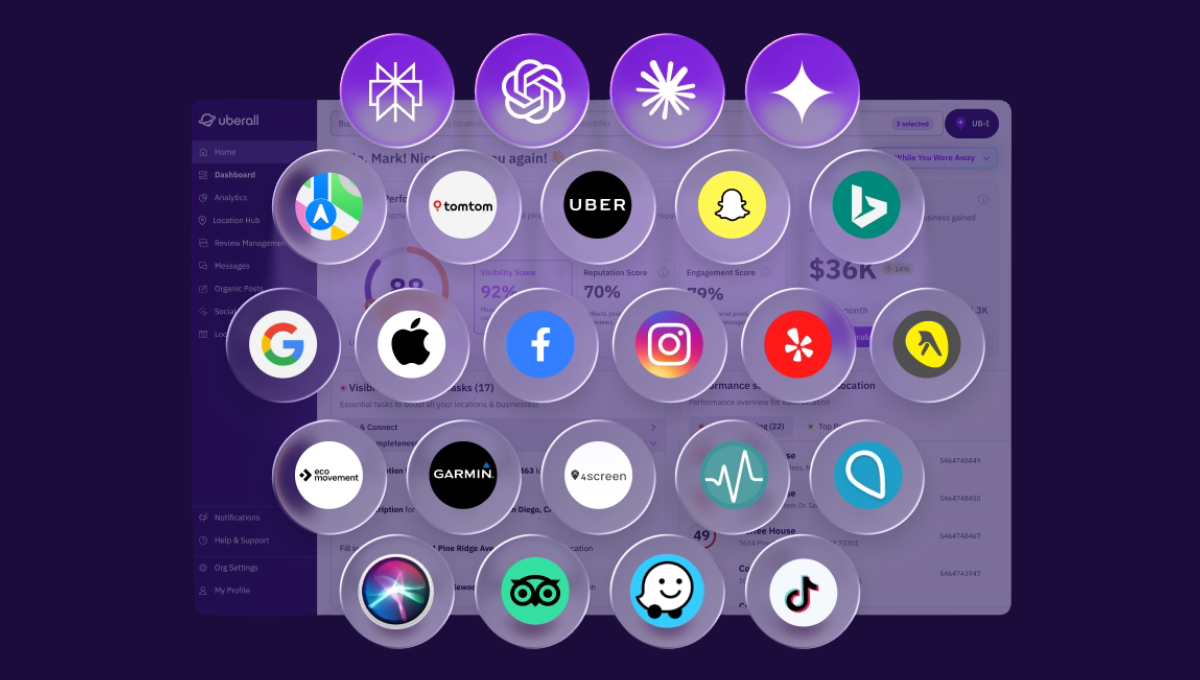
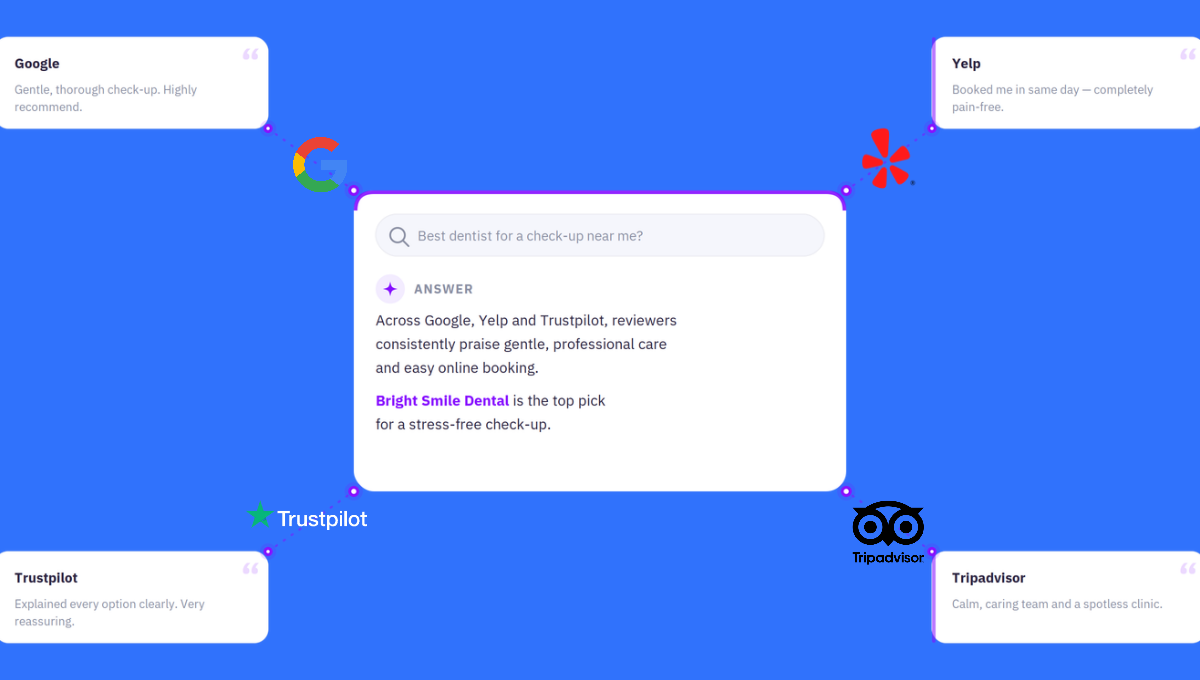
So, GEO is about preparing your content for inclusion in AI-generated search results – not just blue links. But GEO goes beyond a website; it’s about a brand’s total online footprint. That includes their website, social media, listings, directories, and so on. Successful GEO strategies therefore demand marketers adapt to this new search reality, in which users often interact with AI-generated summaries and recommendations rather than clicking through to websites.
Our Technical Expert for AI Search, Visibility, and Local Pages/Websites, Luma explains the nuances between the acronyms SEO, GEO, AEO, and LLMO brilliantly and explains this all using her library analogy:
{{quote}}
So, knowing what we know now, let’s focus on understanding what GEO means for your multi-location marketing strategy. For marketers and agencies, this is the moment to coach clients and teams on a new type of visibility — being answerable, not just rankable.
How to “Do” Generative Engine Optimization: 5 Focus Areas
We need to help brands shift from simply ranking content to creating answer-ready content. But how do we do that?
If you’ve been staying true to SEO best practices, you can breathe a sigh of relief — just double down on these five focus areas of your GEO strategy.
1. Semantic Keywords and Prompts
Content teams and SEOs have long focused on top-of-the-funnel, high-volume keywords. That strategy won’t work for GEO.
If someone asks, “What is a shoe?”, the AI, whether that’s AI Overviews, Claude, or ChatGPT, just gives a definition without citing brands, companies, or sources. These generic queries won’t bring you visibility, authority, or traffic. In GEO, keywords still matter, but they’re only one factor among many that LLMs consider when generating answers.
You want to look at prompts. They’re the specific questions your audience or industry asks generative search tools. In our GEO Studio, the Prompt Center helps you identify the most relevant prompts for your brand — and see which ones competitors are already covering. Higher-priority prompts with more estimated search volume and value, like “Where to buy pickleball shoes,” can then be addressed in the Action Center, where teams can create new, in-depth content or optimize existing pages to close the mention gap and secure your brand’s inclusion in AI responses.
While effective keyword management remains important for successful GEO, deeper user research on high-value prompts can significantly improve your accuracy, visibility, and credibility in AI-generated results.
Finally, continue to write for humans and AI at the same time. Use conversational queries and a tone that mirrors how your customers write their prompts. Clear, human-sounding content is easier for AI to parse — and more likely to be included in answers. Generative engines rely heavily on natural language processing (NLP) to evaluate the context of a phrase or statement, far more than conventional search engines.
2. Consistency and Structured, Contextual Content
While SEO focuses more on keywords, ranking, and linking, GEO focuses on structure, clarity, and retrievability by AI.
On retrievability: Make sure AI bots can actually access your pages. Check that your robots.txt isn’t blocking crawlers, and that key content isn't locked behind JavaScript rendering or paywalls.
Consistent Information
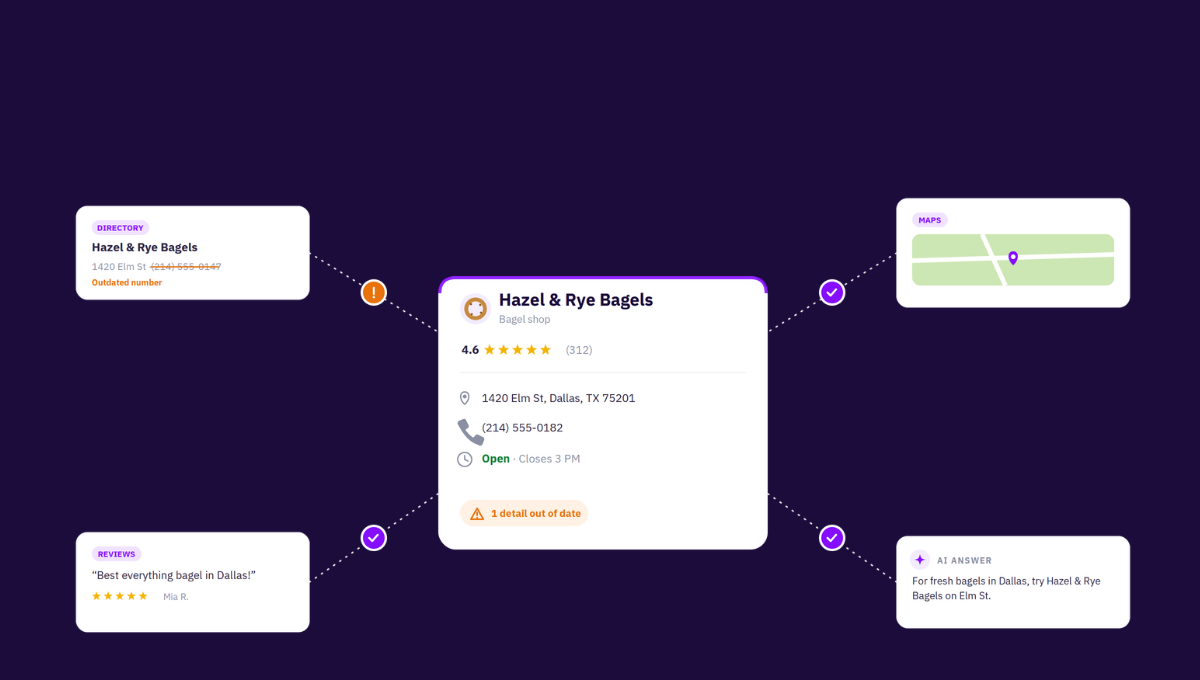
If their business information is mismatched across sources, your clients won’t be included in results — or misinformation will occur, which is when AI presents outdated or incorrect info about your brand as fact. It can confuse customers, damage trust, and cost conversions.
Brands with multiple locations can win trust quickly by helping teams clean up listings, select smart categories, and unify their online presence everywhere.

Structured Information
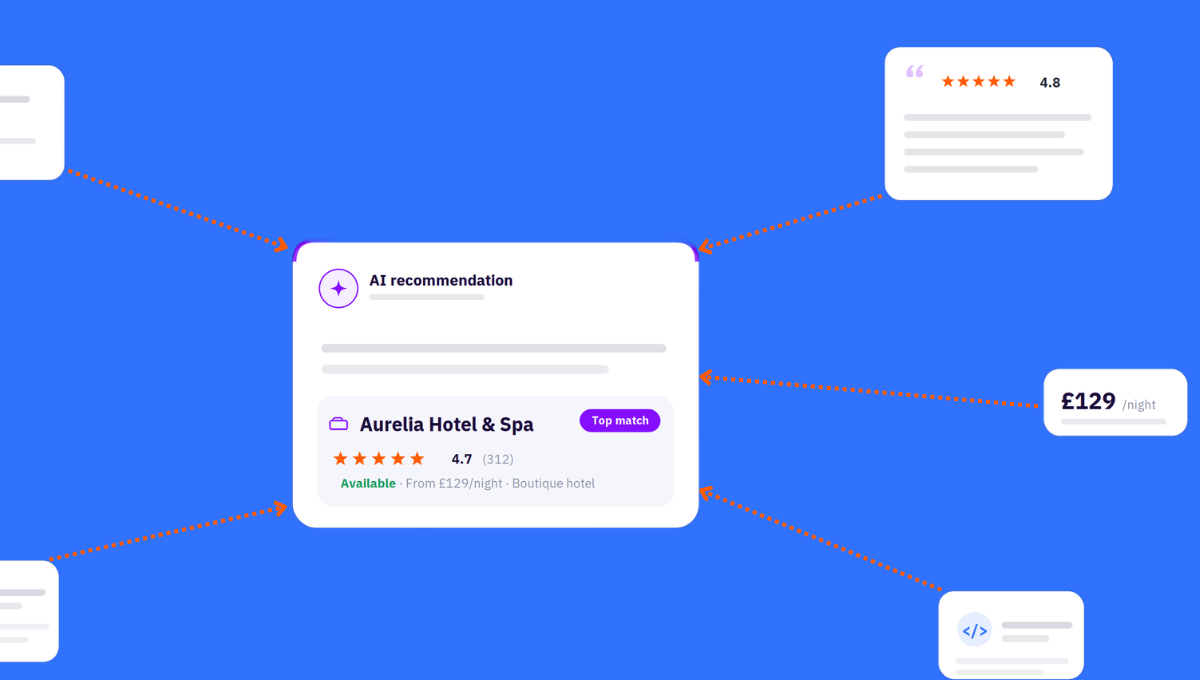
Proper schema markup and NAP consistency make brands machine-readable and easily digestible by both traditional and generative engines. Multi-location businesses should also add markup tags, metadata, and consistent labeling to highlight products, local stores, or upcoming events. This ensures AI systems can easily parse and cite content.
On-page blog content accounts for 44.6% of entry points, followed by the homepage (19%) and product pages (13%). These are the “doors” through which AI engines find and cite brands. That’s why strong editorial hubs and clear navigation matter. So, keep key information accessible on your blog and homepage, avoid hiding it behind forms or paywalls, and provide clear context so AI models can easily interpret and trust your data.
Contextual Information
Implment contextually named photos and videos as well as relevant, precise business profile categories and attributes. Attributes are especially powerful for providing greater business context, so turn them on and monitor them.
Additionally, make sure reviews aren’t just collecting stars but collecting detailed stories from customers — ask them to include more details about their experience when they leave a review. That’s because AI pulls insights from how people talk about your brand.
3. Rich, Unique, Fresh Content
Content shouldn’t just exist.
Consumers are asking better questions — and they need better content in response. They now ask more specific, intentional questions than ever in traditional search. They often compare, ask follow-up questions, and spend their awareness, consideration, and decision-making stage entirely in the tool before choosing to convert.
As we already explained, GEO is about being the best answer to prompts. Once you understand what customers are asking or doubting, your content has to evolve to better explain why your location or brand is better than the alternatives. If your answer isn’t specific, detailed, relevant, or insightful enough, LLMs might look elsewhere when synthesizing a response.
How do you create “rankable” answers? Use statistics, photos and videos, user-generated content, reviews and testimonials, promotions, live updates, or blog and forum posts — anything that can’t be found anywhere else. Not only does this differentiate your brand, it also boosts engagement and signals your expertise, experience, authoritativeness, and trustworthiness (E-E-A-T) to AI systems. Use credible sources, recent references, and expert insights to position your content as a trusted reference point.
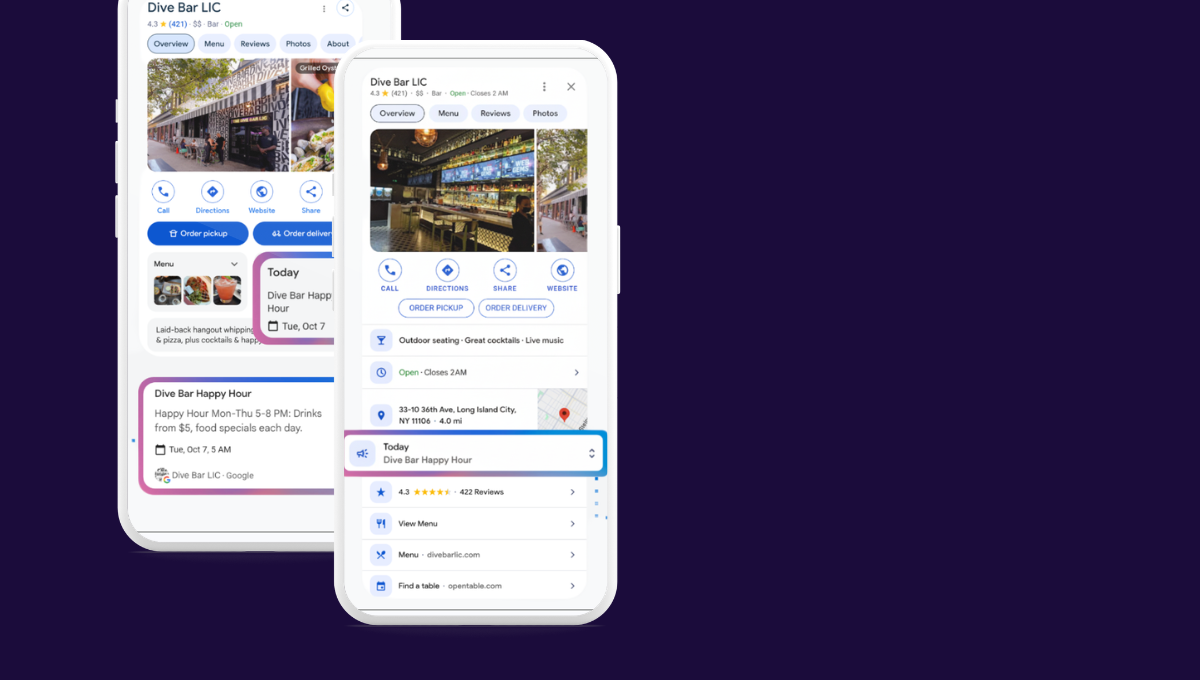
LLMs also pay attention to what’s current. That’s because fresh content signals that your business is active and trustworthy. Post regularly about product updates, promotions, and customer stories — not just to Google Business Profiles, but also to Apple, Facebook, Instagram, and other social platforms to keep your brand active and visible.
4. Brand Mentions for Authority Signals
Building authority is key to GEO strategy for local businesses.
Trusted and consistent citations and backlinks matter more for GEO — especially, when an LLM tries to validate information. The more your brand or location is seen as a reliable source, the more likely it is to be cited in AI responses.
That’s why you should always work on off-page and on-page initiatives to establish your presence in authoritative external ecosystems like industry-specific directories and review platforms. Backlinks to review platforms, and authoritatively integrating credible statistics that reflect your brand’s online reputation.
The experts at AthenaHQ highlight in their report: “Models often highlight new content from competitors, but this advantage will fade if they cannot back their claims with coverage from highly reputable third-party sources.” If customer reviews fail to support a competitor’s positioning over time, that competitor loses influence and credibility — exactly as it should.
Even unlinked brand mentions across the web act as authority signals. That’s because LLMs, unlike search engines, understand a brand’s authority based on the prevalence of particular words and how brand names appear in the context of these words.
You can and should create surround sound around your product – via different content formats too – such as top-cited AI sources Reddit, YouTube, TikTok.
5. Monitoring Your GEO Strategy
Marketers, CMOs, enterprise business owners: I’m sure we can all agree that declining traffic requires immediate action.
Traffic hasn’t always directly moved the needle — but it has influenced success across other pillars of Location Performance Optimization, including visibility, brand engagement, reputation, and conversions. What’s become clearer after initial skepticism is this: GEO is the antidote to this declining traffic.
We’ve seen GEO strategies boost clicks and actions on Google Business Profiles, accelerate bookings, and drive higher-intent sessions in organic search and in the Google Local Pack.
By keeping on top of these metrics, brands can counter the panic of declining traffic and shifting search behavior, gaining solid insights into how to attract high-intent customers and outpace local competitors.
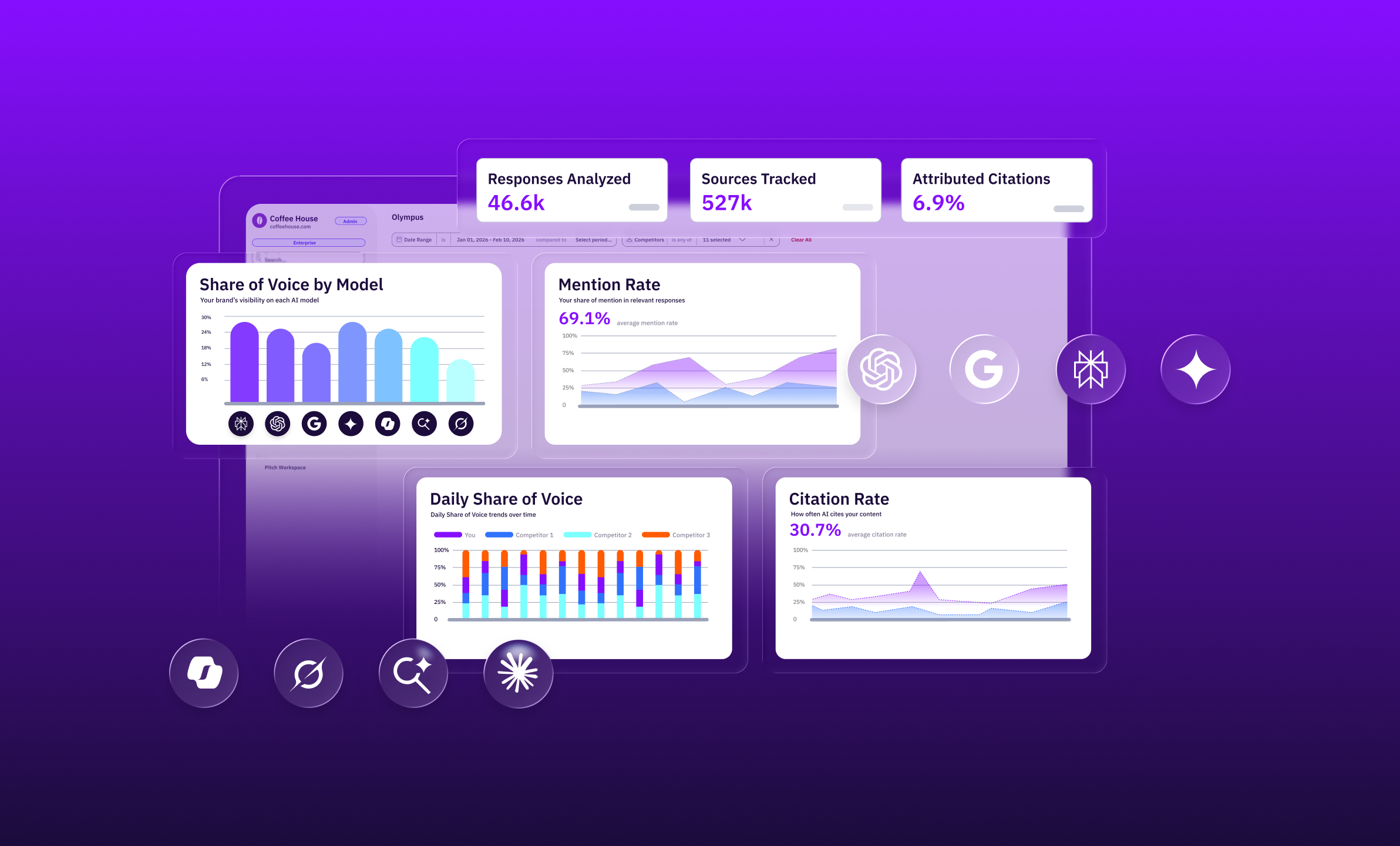
Regularly tracking your brand’s presence in AI responses is crucial. It shows where to adjust coverage, strengthen visibility, and optimize for prompts that matter most to your brand or location. The GEO metrics that provide the clearest insights include Share of Voice (SoV), Mention Rate, Citation Rate, and Prompt Opportunities.

These metrics will help the emerging GEO specialists
- Understand local prompts
- Create content to fill those prompt gaps
- Iterate and improve that content continuously to win citations and backlinks
- Secure SoV over local competitors
Will GEO Force Us to Depart from Traditional SEO?
Why is generative engine optimization important? It’s essentially another layer to ensure brands are ranked and recommended across traditional and AI search.
Everyone knows they need to perform well in AI search, but many don’t yet know how that works. There are new metrics to track and new strategies to implement.
You probably haven’t heard it here first (but we’ve hopefully cut through some of the noise) — GEO won’t fundamentally change good SEO strategies (for now) — but the metrics do look different. So, no, SEO is not dead; there’s just added complexity. The stakes are higher if you ignore the five focus areas above.
Investing time in exploring the world of GEO and monitoring GEO metrics is an opportunity not just for SEO teams, but also for PR, social, brand, and sales teams. For brands with multiple stores, the insights into customer sentiment are considerable, and the opportunities to leverage those insights to bring in high-intent customers are enormous.



1,800 brands trust us to stay visible
— not just show up once or twice in local search.

Frequently asked questions
Generative engine optimization (GEO) is the practice of influencing how AI engines like ChatGPT, Claude, Perplexity, and Gemini include, describe, and recommend your brand in their answers — rather than optimizing for clicks or rankings alone. GEO includes your whole online footprint: website, social media, listings, and directories. As one Uberall expert puts it, GEO is about making your content so clear, structured, and authoritative that AI summarizes you accurately and favorably.
A GEO strategy in marketing is your plan for getting a brand included and recommended in AI-generated answers. It centers on five focus areas: targeting the prompts your audience actually asks; keeping business information consistent and structured so AI can read it; publishing rich, fresh, unique content; earning brand mentions and citations for authority; and monitoring AI visibility over time. Together these move you from simply ranking content to being the answer AI gives.
Generative engine optimization matters because it’s another layer ensuring your brand is ranked and recommended across both traditional and AI search. As discovery shifts to AI engines and organic clicks decline, GEO helps compensate for this traffic drop. It's been shown to boost Google Business Profile actions, accelerate bookings, and drive higher-intent sessions.
GEO is the evolved version of SEO. SEO is about keywords, rankings, and links: Getting your book onto the right shelf so people can find it. GEO is about structure and clarity so AI can actually read that book, summarize it, and cite you. Good SEO still does the heavy lifting underneath GEO, so teams aren’t starting from scratch. What changes is how you measure success. It’s less about your spot on the SERP, more about Share of Voice, Mention Rate, and Citation Rate. Luma talks about the book analogy on Episode 28 of our Local Marketing Beat podcast.
You do generative engine optimization by doubling down on five focus areas: Research the specific prompts your customers ask AI tools; keep listings and content consistent and structured with proper schema and NAP; publish rich, unique, fresh content that answers those prompts better than competitors; build authority through brand mentions and citations on trusted sources; and monitor your AI visibility continuously. For the phase-by-phase version, see our piece how to "do" GEO optimization.
GEO works for local and multi-location store marketing by making every location recommendable, not just rankable. AI engines need consistent business information — name, address, hours, categories — across listings and directories before they’ll mention or cite a location. From there, target the local prompts customers ask with location-level content and reviews. Multi-location brands that unify their data and fill local prompt gaps win inclusion across AI answers at scale.
You measure GEO success with metrics built for AI search rather than SERP position. The clearest are Share of Voice (your presence versus local competitors), Mention Rate (how often AI names your brand), Citation Rate (how often AI cites your content as a source), and Prompt Opportunities (high-value prompts worth targeting). Tracking these alongside traditional rankings shows where to strengthen coverage and how AI perceives and recommends your brand.
GEO best practices come down to five things: Target real customer prompts, keep information consistent and structured, publish rich and fresh content, earn brand mentions and citations, and monitor AI visibility continuously. For a step-by-step version you can work through, the 90-day local GEO checklist turns these into a phased action plan for multi-location brands, covering the three pillars and four phases to get found, trusted, and chosen in AI search.
Generative engine optimization (GEO) is the practice of influencing how AI engines like ChatGPT, Claude, Perplexity, and Gemini include, describe, and recommend your brand in their answers — rather than optimizing for clicks or rankings alone. GEO includes your whole online footprint: website, social media, listings, and directories. As one Uberall expert puts it, GEO is about making your content so clear, structured, and authoritative that AI summarizes you accurately and favorably.
A GEO strategy in marketing is your plan for getting a brand included and recommended in AI-generated answers. It centers on five focus areas: targeting the prompts your audience actually asks; keeping business information consistent and structured so AI can read it; publishing rich, fresh, unique content; earning brand mentions and citations for authority; and monitoring AI visibility over time. Together these move you from simply ranking content to being the answer AI gives.
Generative engine optimization matters because it’s another layer ensuring your brand is ranked and recommended across both traditional and AI search. As discovery shifts to AI engines and organic clicks decline, GEO helps compensate for this traffic drop. It's been shown to boost Google Business Profile actions, accelerate bookings, and drive higher-intent sessions.
GEO is the evolved version of SEO. SEO is about keywords, rankings, and links: Getting your book onto the right shelf so people can find it. GEO is about structure and clarity so AI can actually read that book, summarize it, and cite you. Good SEO still does the heavy lifting underneath GEO, so teams aren’t starting from scratch. What changes is how you measure success. It’s less about your spot on the SERP, more about Share of Voice, Mention Rate, and Citation Rate. Luma talks about the book analogy on Episode 28 of our Local Marketing Beat podcast.
You do generative engine optimization by doubling down on five focus areas: Research the specific prompts your customers ask AI tools; keep listings and content consistent and structured with proper schema and NAP; publish rich, unique, fresh content that answers those prompts better than competitors; build authority through brand mentions and citations on trusted sources; and monitor your AI visibility continuously. For the phase-by-phase version, see our piece how to "do" GEO optimization.
GEO works for local and multi-location store marketing by making every location recommendable, not just rankable. AI engines need consistent business information — name, address, hours, categories — across listings and directories before they’ll mention or cite a location. From there, target the local prompts customers ask with location-level content and reviews. Multi-location brands that unify their data and fill local prompt gaps win inclusion across AI answers at scale.
You measure GEO success with metrics built for AI search rather than SERP position. The clearest are Share of Voice (your presence versus local competitors), Mention Rate (how often AI names your brand), Citation Rate (how often AI cites your content as a source), and Prompt Opportunities (high-value prompts worth targeting). Tracking these alongside traditional rankings shows where to strengthen coverage and how AI perceives and recommends your brand.
GEO best practices come down to five things: Target real customer prompts, keep information consistent and structured, publish rich and fresh content, earn brand mentions and citations, and monitor AI visibility continuously. For a step-by-step version you can work through, the 90-day local GEO checklist turns these into a phased action plan for multi-location brands, covering the three pillars and four phases to get found, trusted, and chosen in AI search.