Local SEO vs Organic SEO: The Ranking Factors Aren’t the Same, But AI Search Needs Both Before It Recommends You
Local SEO and organic SEO have always run on different ranking factors. AI search doesn't pick a side — it reads both before deciding whether to recommend you.

- Local SEO and organic SEO run on different ranking systems, and applying certain organic tactics directly to your GBP is one of the fastest ways to trigger a suspension
- AI systems read local and organic signals simultaneously, so businesses that optimize across local and organic SEO will perform better in search
- Reviews now function as training data for AI models, and review diversity across Google, Apple Maps, Yelp, Facebook, and niche directories matters more than volume on a single platform

What we hear from multi-location businesses all the time is some version of “We’re already doing SEO” — meaning organic — or “We’ve got our GBP sorted” — meaning local. Some teams assume that one discipline covers the other, when we know it doesn’t. And not just because they require different tools, tasks, and skillsets.
Both influence the same four outcomes — visibility, reputation, engagement, and conversions — and when either side falls short of the right optimizations, location performance really suffers. A perfectly optimized GBP won’t save a website with thin content. Strong organic rankings won’t help a location with no reviews and inconsistent listings data.
I’m going to take some local-SEO-vs-organic-SEO insights from a recent expert local SEO panel, hosted by Adam Malamis of Gander, to break down where the two are different, where they help each other, and the mistakes that happen when you assume what works for one will work for the other.

Different Ranking Systems, Different Mistakes That Can Get You Suspended
The distinction between local and organic SEO isn’t something the industry invented to sell more services. I understand the suspicion, but the two are really quite different. So much so, that any online SEO forum will have channels dedicated especially to local SEO (Reddit, Women in Tech SEO, etc.).
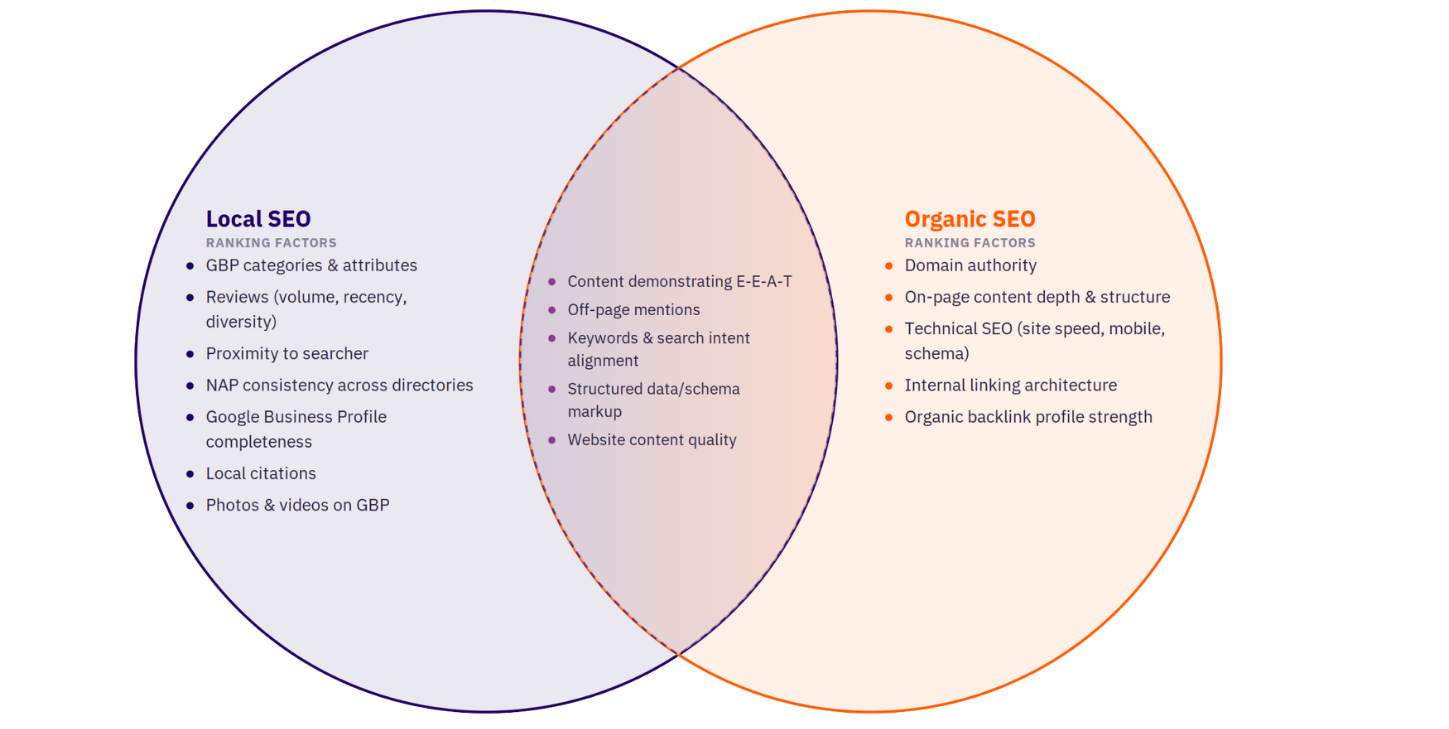
Google’s Local Pack and its organic blue links run on different ranking systems with different signal weights — just check out our summary of Whitespark’s 2026 Local Search Ranking Factors, in which we also link to the original report. The Local Pack prioritizes Google Business Profile (GBP) signals — categories, reviews, proximity — while localized organic results lean more on on-page content, backlinks, and domain authority. There is overlap, but the weighting of ranking factors is different.
And it’s a problem when teams don’t realize the best practices are different.
Claudia Tomina, a Platinum Google Product Expert and founder of Reputation Arm, uses this example: “Your business name matters for the local map pack ranking. Your structured data like your business categories, the services that you have listed — this is all stuff that’s not necessarily on your website, but within your Google Business Profile. It’s a different set of ranking structures.”
Ehab Aboud, Principal Solution Engineer at Uberall and a Google Business Profile Product Expert, sees teams fail to differentiate between local and organic SEO all the time: “Those who follow typical SEO strategies when they go into the world of local SEO find themselves in a bit of a bother, mainly through suspensions. Most of their efforts in local SEO will be considered keyword spamming, or there’s not enough information submitted on their listing.”
And this isn’t just small businesses — even brands with thousands of locations run into individual suspensions when someone applies website-SEO thinking to their GBP.
He even says he sees local SEO practitioners as having a structural head start when it comes to AI search optimization (AEO or GEO): “The data in local, especially when you’re making local searches in AI — ChatGPT, Gemini, Claude — is already restructured. The transition for AI is … you’ve pretty much already got it there because AI really loves structured data. Those who are transitioning from classic blue link SEO to the world of AI, there’s a little bit more heavy lifting to do.”
Ben Duffy of Quirky Digital confirms this: “We’re getting a lot of inquiries from clients who are starting to use the AI tools. They’re asking us, ‘Can we do GEO? I want to be seen more on ChatGPT and Gemini.’ But when you actually walk into their campaigns, they’re showing up there already.” The local SEO fundamentals were already doing the heavy lifting.
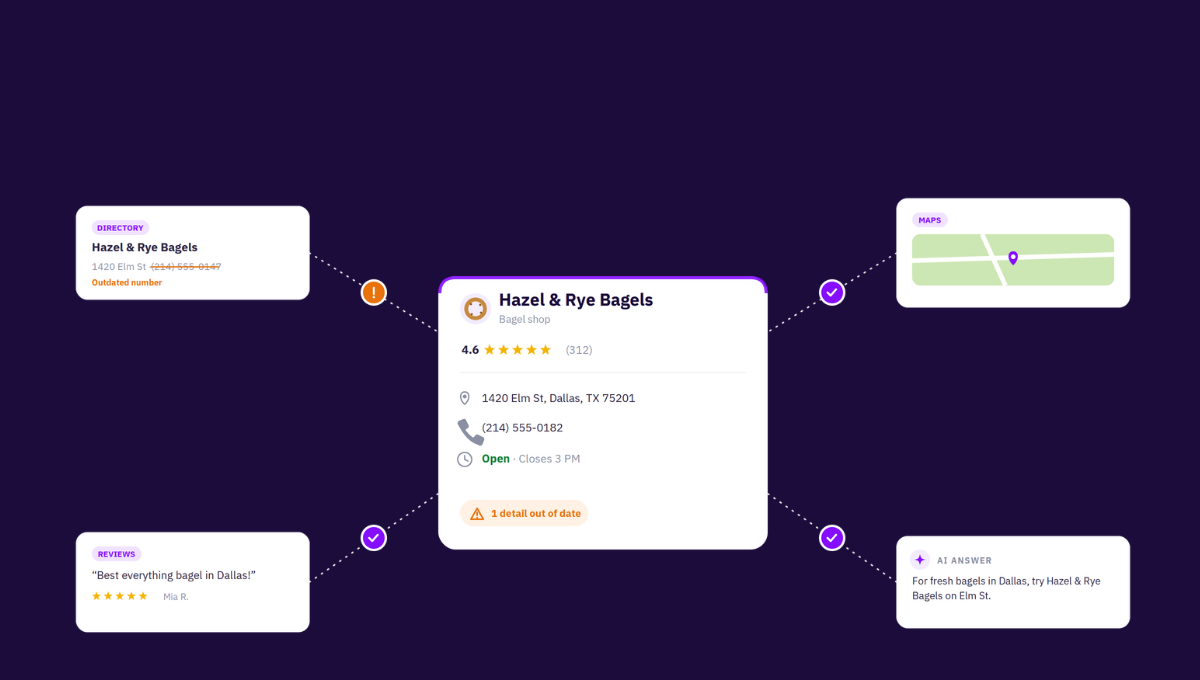
One thing businesses should also be aware of with their GBP is that a suspension doesn’t always follow the edit that caused it. Claudia shares: “A lot of people have been in business for years. They might make a slight edit and then trigger a suspension because what Google is doing is an integrity check. If there are some inconsistencies, you may trigger a suspension.” In other words, the edit didn’t cause the problem; it just triggered the audit that found it. That’s why location data management platforms are critical among multi-location brands to ensure all-important data consistency at scale. Without it, you’re exposed to both suspensions and omissions from AI recommendations.
For multi-location brands, the consistency challenge is the same whether you have one location or ten thousand. Ehab explains: “If the formatting is a little bit off, then Google and some of the other crawlers treat these addresses as different. And then potentially they start creating duplicates for you. If you have that with one location, with 10,000, you’re just scaling that problem.”
Two things we can be sure of are that for both local and organic SEO:
- Optimize your digital presence without resorting to spam — for both local and organic. Google suspensions and Helpful Content penalties both come from the same place: trying to cheat the system instead of being helpful and trustworthy.
- If you’re managing multiple locations, use software to keep your data accurate at scale because that consistency is the absolute foundation for how you perform in local search.
AI Search Reads Both Local and Organic Signal Sets at Once — Especially Reviews
When someone asks ChatGPT or Google AI Mode something like “Where can I find a quality plumber in Chicago at short notice?” (there was a lot of plumber talk in this panel session), the model reads local and organic signals together.
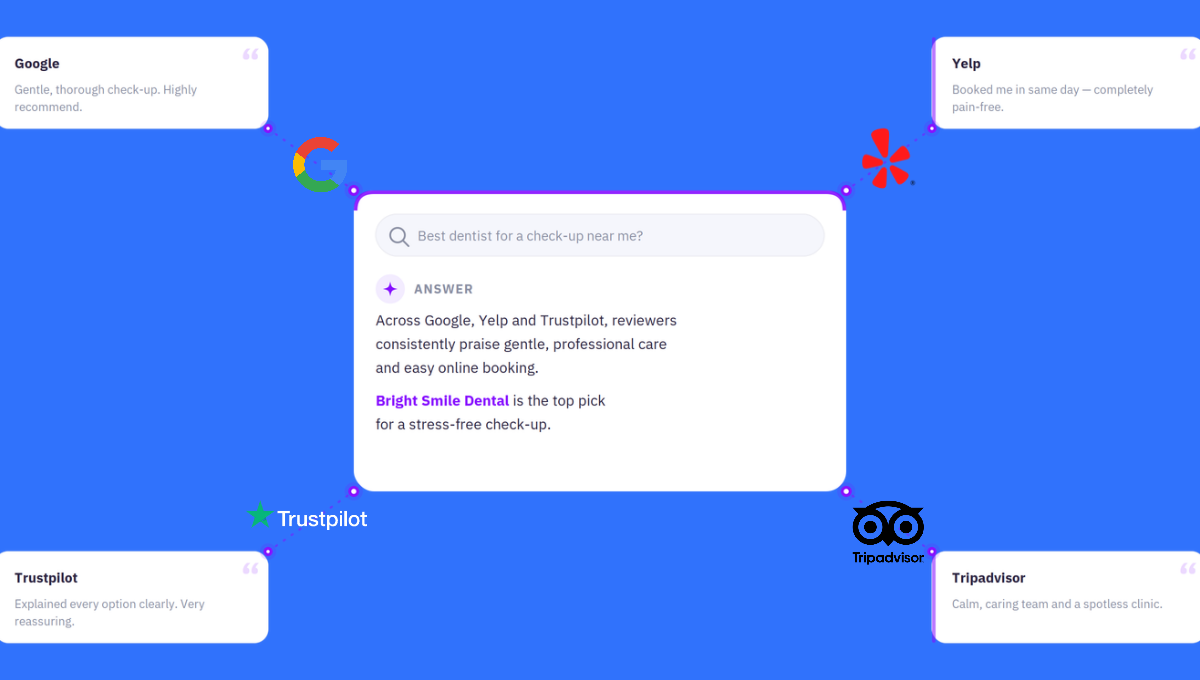
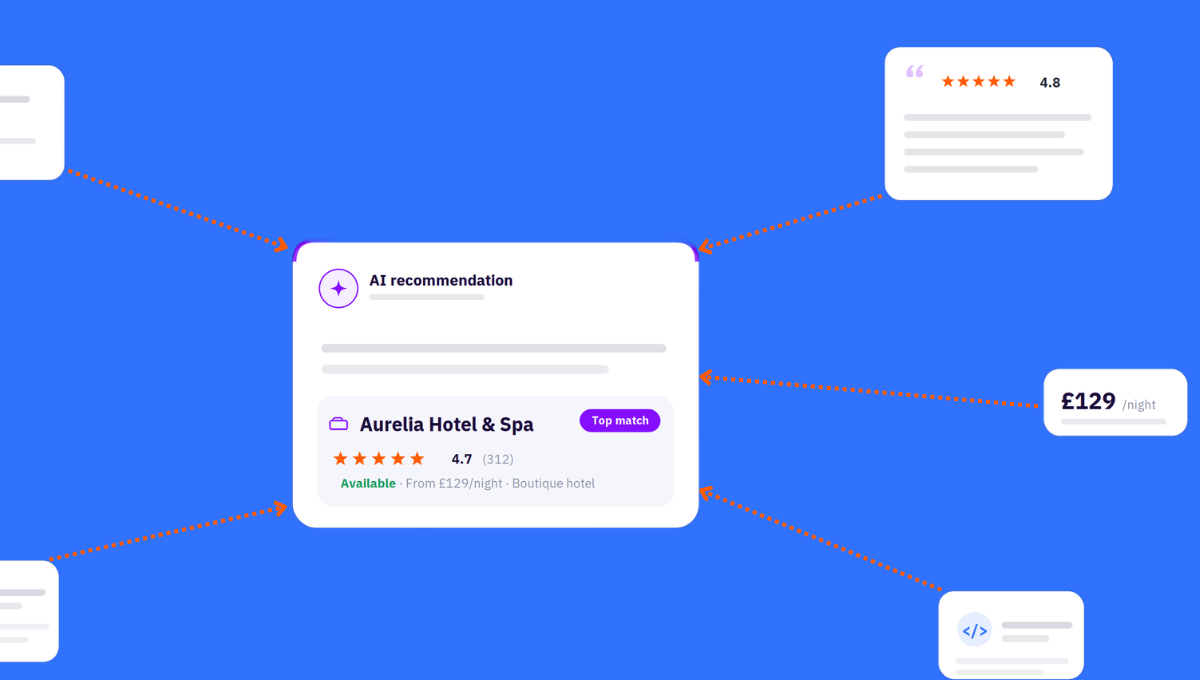
What AI systems actually cross-reference before deciding whether to recommend a local business is broad — they’re looking for the most consistent, detailed, and well-referenced presence across all of the following:
- Directory listings — even niche ones
- Reviews across multiple platforms (Google, Apple Maps, Yelp, Facebook, TripAdvisor)
- Website content
- Structured GBP data
- Social mentions from influencers
I’m going to really talk about reviews some more because they are, in my opinion, still so overlooked by businesses distracted by what their competitors are doing. I guess the panel agreed, since they spoke about reviews at some length.
Ehab gives this personal example of how optimizing for both local SEO and organic SEO wins over customers: “As someone who seeks out halal food, the only way I can do that is if I go into the reviews of a restaurant and search the word halal. I didn’t know that Five Guys — most around the UK — they’ve got a dedicated page for that. I would instead go to the reviews, and that’s because everyone is talking about them there.”
Claudia takes this even further: “Reviews are literally, by definition, noncommodity content. You can’t replicate them. They are exactly what the AI engines are looking for, and they are the best way for you to get recommended by AI.” She also mines review content for FAQ material to add to clients’ websites (10 out of 10; would recommend).
If customers frequently mention specific things in their reviews (dress code, gluten-free options, parking), those details belong on the website too, where AI models can verify them and generate local recommendations. That’s really the crucial link between local and organic: Reviews generate the keywords, sentiment, and topics, and business websites or local landing pages give AI a structured source to confirm them against.
One last point on this: Review volume, recency, and diversity across platforms all feed AI models, meaning that a location with 200 Google reviews but nothing on Yelp, Facebook, or TripAdvisor has a narrower AI footprint than one with 100 reviews spread across five platforms. And, as Ben points out, responding to reviews — especially negative ones, with specific detail — adds more indexed content for AI to work with.
His advice: “Your negative reviews are the ones that you should put more time into. If you get a good review, a very generic response — ‘thank you for this five star review, we really appreciate it’ — that’s enough. But if it’s a bad review, you want to get into the depths of it.”
It’s Never Been Local SEO vs Organic SEO in Local Search
The whole “local SEO vs organic SEO” framing made sense when Google’s Local Pack and organic results were the only two surfaces that mattered. Maybe this search term originates from small marketing teams who are struggling to keep up with all their tasks and are deciding which discipline to prioritize.
But now that AI search, social platforms, and voice assistants all generate local recommendations from overlapping data, treating them as two isolated strategies or as a completely identical strategy can result in painful penalties or not being recommended by AI tools. And obviously, these two scenarios become seriously costly at scale.
So if you’re an SEO manager at a multi-location brand and you’re wondering where to start, here’s the short list, confirmed by the expert panel:
- Audit your GBP categories and attributes per location — these are the fields AI search reads first when deciding whether to recommend you.
- Build review diversity across Google, Apple Maps, Yelp, Facebook, and any niche directory relevant to your category.
- Keep location data consistent from a single source of truth — formatting mismatches create duplicates that confuse both traditional crawlers and AI models.
- Make sure your website backs up every claim your GBP makes — if your GBP lists a service, your website should have a dedicated page for it with real content.
- Respond to reviews with specific detail, especially negative ones — every response adds indexed content that AI models use to understand your business.
If this kind of content is useful to you, we write about local performance in the era of AI search pretty much every week, so stick around and stay in the loop with all things local search.


1,800 brands trust us to stay visible
— not just show up once or twice in local search.