Podcast Pieces: How Brands Connect Through Hyperlocal Social Advertising
Discover how hyperlocal social media campaigns for local business drive revenue & boost local relevance from our expert podcast guest, Sarah Cucchiara.


Hyperlocal marketing — and particularly hyperlocal social media advertising — is one of the most powerful ways for brands to reach larger audiences and connect directly with communities — but really reaching and then resonating with these local communities isn’t easy. No matter what budget you’re working with.
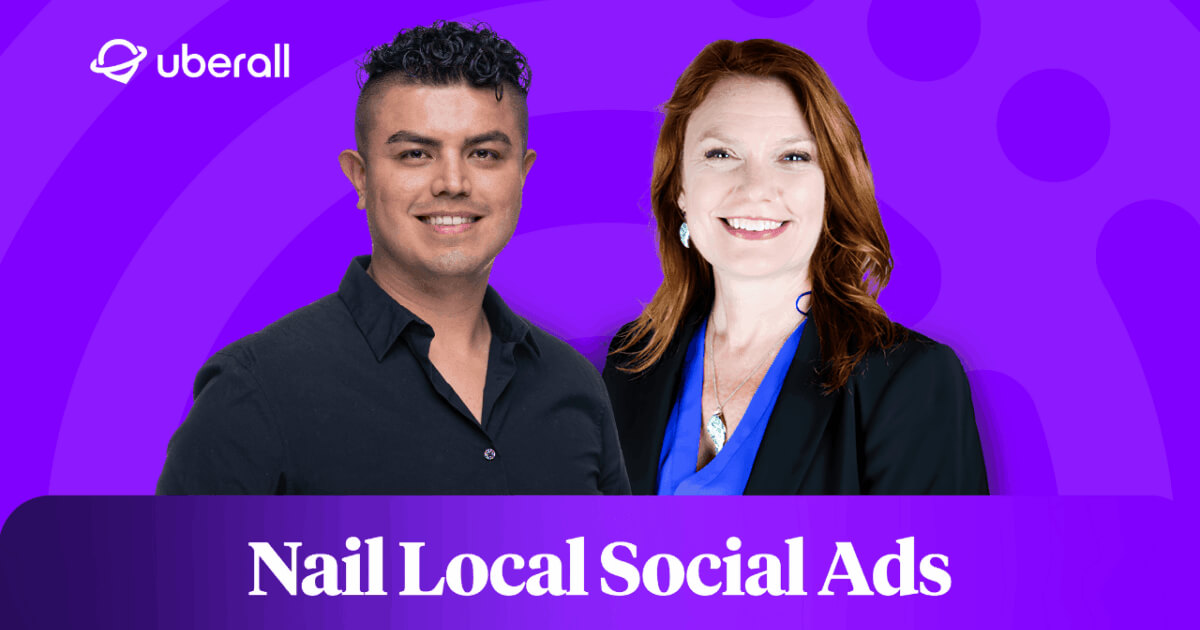
In a recent episode of our Local Marketing Beat podcast, host Christian Hustle sits down with Sarah Cucchiara, Vice President of Client Success at Tiger Pistol, to explore how national brands and local businesses alike can leverage cross-channel advertising to drive results.
Together, they unpack Sarah’s two decades of experience across B2C and B2B, her take on building local campaigns, and what the future of hyperlocal advertising looks like in an AI-driven world.
What Do We Mean By Hyperlocal?
Sarah Cucchiara: “It's all about how you create that local connection, that local relevancy within that larger brand messaging – that is really critically important.”
So what exactly does “hyperlocal” mean in the context of social advertising? As Sarah explains, it comes down to a few key attributes.
First, it’s geographically precise — small, defined areas around a business — sometimes within a two-, five-, or ten-mile radius, sometimes a set of zip codes, or even a specific neighborhood within a city. For service-based companies or dealers with strict territories, this kind of targeting ensures businesses reach the exact community they serve.
Second, it’s about relevance. Hyperlocal is about making the message feel personal to the people who live there. That could mean featuring the right address, phone number, or store page link. It could also mean referring in your ads to a nearby mall, a recognizable landmark, or even a local event.
In short, hyperlocal social advertising is about creating that authentic local connection while still carrying the broader brand message. That balance between scale and community is what makes campaigns successful.
Local Content Versus Brand Content
Sarah Cucchiara: “Local is really about driving that action that’s going to result in a sale. That’s what we’re trying to do for that local owner, whether they’re a franchisee, a store manager, a dealer, even an SMB that works with our reseller clients. They’re trying to drive revenue.”
When it comes to calls-to-action, Sarah explains, local advertising has a very different purpose than national campaigns. At the national level, the goal is often awareness — driving people to a website, a store directory, or just getting the brand in front of as many eyes as possible.
Local, on the other hand, is about action. It’s about getting someone to take the next step with a specific store, dealer, or franchise location. That might mean clicking through to a local landing page, calling the store directly, or ultimately making a purchase. For local owners — whether they’re franchisees, managers, or even an SMB — that action translates directly into revenue.
Of course, awareness still matters. National campaigns help fund big, creative, polished messaging, and broad promotions — the kind of brand presence that attracts franchisees in the first place. But those owners also need their own advertising to drive results on much smaller budgets. And that’s where the challenge comes in: How do you take the power of national strategy and make it work locally, at a fraction of the spend?
The Prize of Being Highly Relevant
Sarah Cucchiara: “When you've got it executed right, you can really drive great value for both the parent brand and for those local owners. Those clients of ours that are looking at ROAS and purchases driven from this channel are seeing that when executed well, this local social channel is one of their top top performing channels. We’re seeing higher conversion rates and higher purchase value.”
So how do all the pieces of hyperlocal advertising come together? According to Sarah, it starts with the way campaigns are built. From the creative messaging to the platforms themselves, the focus is always on showing up at the neighborhood level.
Take Meta, for example. The platform actively rewards local relevance with better costs. Why? Because the data shows that local campaigns perform better. When ads come from a local business page, target the right geography, and include calls-to-action that point directly back to a nearby store or dealer, conversion rates naturally improve. Everything works together — and the platforms recognize that.
When executed well, this approach creates value on two levels: It amplifies the brand’s national presence while also driving real revenue for local owners. That’s why, from Sarah’s experience, brands that measure performance closely are finding that local social advertising isn’t just effective — it’s often one of their top-performing channels.
What Are the Challenges of This Kind of Advertising?
Sarah Cucchiara: “You've got small budgets. You've got a limited number of eyeballs within a geographical area. You can't apply that media strategy that's at the national level: ‘I'm going to do a bunch of tests and a bunch of ad variations.’ The more you fragment that budget, I think you really lose out on optimization opportunities.”
Of course, hyperlocal social media advertising isn’t without its challenges — especially in franchise and dealer models. From Sarah’s experience, there’s always that one franchisee who decides to stray from the strategy — for example, by experimenting with a channel that has nothing to do with the brand. While their intentions might be good, these off-brand efforts can create friction between the corporate team and local owners.
The reality is that franchisees have real skin in the game. They’re investing their own money into marketing, but most aren’t professional marketers. That can lead to misaligned messaging or campaigns that dilute brand equity. On the flip side, Sarah cautions, the answer isn’t for the parent brand to take complete control and simply repurpose national campaigns at the local level. That approach ignores the community nuances that make local advertising so powerful.
The sweet spot, she says, lies in collaboration. Brands need to provide franchisees with tools, assets, and creative frameworks that are both on-brand and easy to localize. They also need to rethink media strategy: With smaller budgets and fewer eyeballs per market, you can’t just copy-paste a national playbook. Nor can you run dozens of ad variations — fragmenting spend only limits performance.
The Future of AI and Social Media Advertising
Sarah Cucchiara: “One of the biggest friction points we have with our clients, and it doesn't matter if you are a huge national brand or if you’re an SMB — it’s creative. It's the media; it’s creating that copy. I got to find ways to automate that make that more efficient. What we’ve seen in the past six months are huge leaps in higher-quality production coming out of some of these AI tools.”
AI is rapidly changing how local advertising is executed — in both campaign delivery and creative production.
On the platform side, Meta has been vocal about its ambitions, even suggesting that by 2026, advertisers will only need to provide an objective and a budget, and the system will take care of the rest. While that timeline may be overly ambitious — especially for SMBs and franchise organizations — the progress is undeniable.
Meta’s algorithms are becoming increasingly effective at identifying and reaching the right audiences when advertisers supply strong signals: well-defined objectives, conversion events tracked through the pixel, and first-party data. The more efficiently the system can work within its “black box,” the better the results.
Creative, however, remains the biggest friction point. Producing localized ads at scale is a heavy lift, and the challenge only intensifies with video content. Traditionally, this has been one of the largest bottlenecks for both national brands and small businesses alike.
But in just the past six months, AI tools have made significant strides in generating high-quality copy, imagery, and video. Nearly every major creative platform now integrates generative AI, making content production faster, more affordable, and more scalable. This evolution could be a major unlock for hyperlocal advertising — enabling brands to deliver relevant creative at scale without overburdening local owners.
Ready to Transform Your Business?
Connect with our partnership team to learn how Uberall can help you achieve similar results. Get a personalized consultation and discover the opportunities waiting for your business.