Why Local Brands Need to Think in Entities
Find out why most local or multi-location brands aren’t yet winners at playing the entity game — that is, entity-based SEO for LLMs to help connect the dots around their locations.


Your NAP is consistent across 20 directories, you have a fully optimized Google Business Profile (GBP), and a stack of five-star reviews — and still watch a competitor with half your citations outrank you in Maps.
This is a signal, not a fluke.
Most local or multi-location brands aren’t yet winners at playing the entity game — that is, enabling AI answer engines and traditional search engines like Google to connect the dots around their locations.
Here is what that means and what to do about it.
What an “Entity” Actually Means for Local Brands
An entity is not a technical term you need to memorize — it’s a simple concept:
Before recommending a business, Google is constantly asking itself: “Do I actually know this business?”
When Google or AI systems like ChatGPT build that understanding, they don’t rely on one source. They assemble signals from your website, Maps listing, reviews, photos, local press mentions, and social presence to form a single, coherent picture.
Large language models (LLMs) work in a similar way. They don’t “crawl” in real time like search engines, but they rely on structured and widely corroborated information across the web. If your business shows up inconsistently across sources, it becomes harder for them to confidently include you in answers.
If that picture is clear and consistent, you are a known entity. Google surfaces known entities.
If the picture is patchy or contradictory, you become harder to trust. For example:
- Your website says you close at 9 PM, but your Google Business Profile says 7 PM
- Your business is listed as a “physiotherapy clinic” in one place and “wellness center” in another
- Reviews mention services that are not listed on your website
- Different phone numbers exist across directories
These inconsistencies don’t just confuse users; they weaken how search engines and AI systems understand you.
This is why two businesses in the same neighborhood, in the same category, with similar review counts, can appear completely differently in local results. Google understands one better than the other or sometimes not at all.
Why NAP Is No Longer Enough — EAP Is the New Game
NAP (name, address, phone number) consistency still matters. But it is table stakes now, not a differentiator.
Think of NAP as your business card. It tells Google and AI engines you exist. It does not tell them what you are about, whether you are trustworthy, or why someone should care.
That is where EAP comes in: Entity, attributes, proof.
- Entity: The business itself. Clearly defined, clearly named, clearly located. “Nourish Bakehouse, New York city” is an entity. “Our bakery” is not.
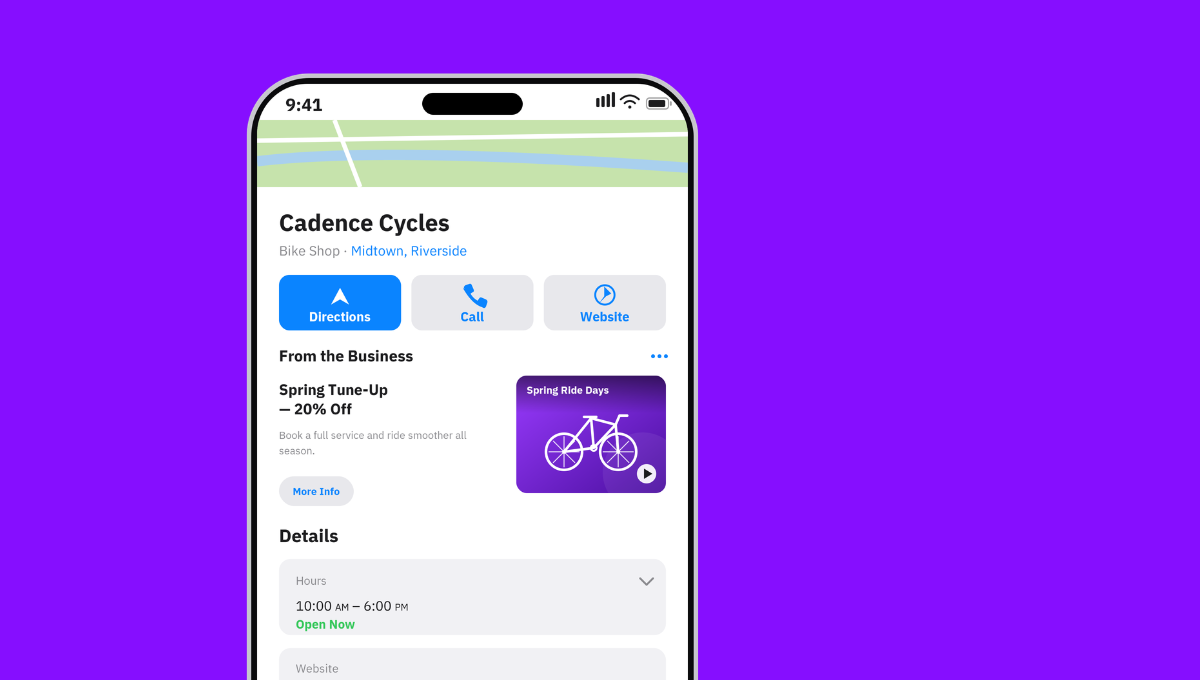
- Attributes: The structured facts that give the entity meaning. Business type. Hours. Price range. Services offered. Do you do custom orders? Catering? These details, especially when marked up with structured data, help engines service your business in the right
- Proof: What validates it all. Reviews that mention specific services. Press coverage. Local blog mentions. GBP posts. Customer photos. These signals do not just build reputation; they confirm to search and AI systems that the entity is real, active, and relevant.
When all three layers are strong and consistent, Google stops treating you like a listing and starts treating you like a known brand. Known brands get surfaced in Maps, Knowledge Panels, and AI-generated answers. Unknown ones don’t.
How Google Maps, Knowledge Panels, and AI Tools “Understand” a Brand
Here is where most brands trip up.
When someone searches “best physiotherapy clinic near Botanical Park,” Google or ChatGPT are not scanning for which websites use that phrase. They are looking at which entities they already understand well enough to confidently recommend.
This is why a clinic with a decent website and strong entity signals like specific reviews, accurate GBP data, consistent listings, and local mentions can outrank a clinic with a beautifully optimized site but weak entity presence.
And this is even more true now that AI tools are entering local search.
ChatGPT, Google’s AI Overviews, Microsoft Copilot — these systems don't do keyword matching the way traditional search did. They pull from structured knowledge. They rely on what is already understood about an entity across multiple sources.
If your business is not clearly understood as an entity, it is not just invisible in Maps. It is invisible to AI discovery too. That is the part most local brands have not reckoned with yet.
What Multi-Location Brands Get Wrong Today
A brand with 10, 30, or 100 locations does not have one entity problem. It has dozens or hundreds of them. And most brands treat it like a copy–paste exercise.
The playbook for underachieving brands has been (and often still is): Take a template location page, swap in the city name and address, maybe change a photo, done. Repeat across all locations.
But substantively identical pages do not read as meaningful entities. They read as thin duplicates. Google explicitly states that local rankings are based on relevance, distance, and prominence , with prominence influenced by signals like reviews, links, and overall presence across the web.
Think of “prominence” as a proxy for entity strength.
And thin entities do not rank.
Beyond the pages, there is usually an inconsistency problem. Hours that differ between the website and GBP. Category mismatches across listings. Old phone numbers still sitting in third-party directories. Every inconsistency weakens the entity.
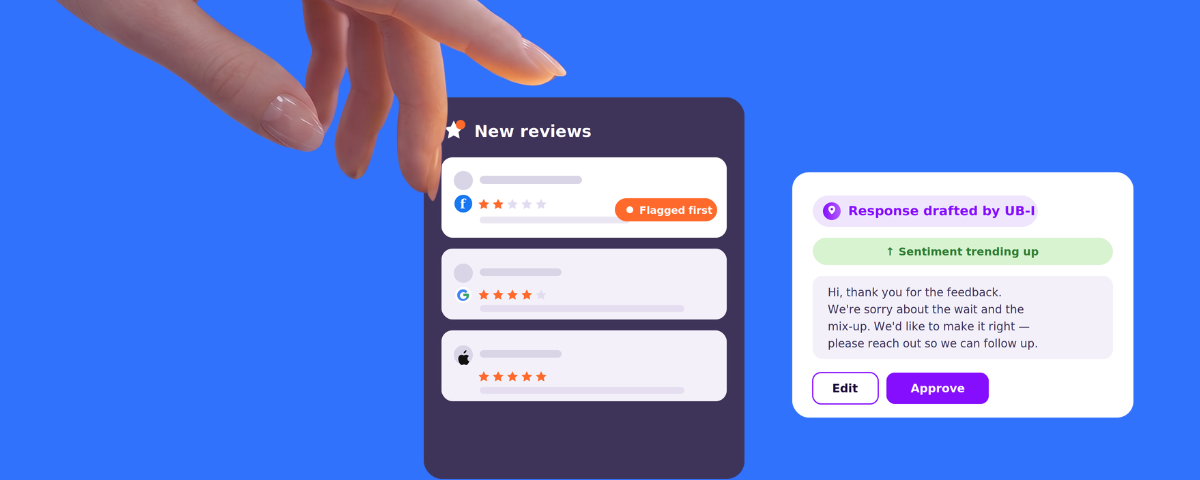
Then there is the reviews gap. Most brands funnel review generation energy toward the flagship location or the brand level. Meanwhile, newer or smaller locations have a handful of reviews or none and wonder why they are invisible locally.
The brand entity might be strong, but the location entities are starving.
A Simple Entity Checklist (Your Easy Win Starting Point)
You don’t need to overhaul everything at once. Start here.
- Define each location as its own entity. Every location needs a dedicated local page with a unique address, phone number, and content that genuinely reflects that location. Not just a swapped city name.
- Add attributes through structured data Mark up your location pages with schema, business type, hours, services, price range. If you are skipping this, you are leaving easy entity clarity on the table.
- Audit for consistency. Run a check across your listings across directories and your website. Are the opening hours right? Are categories consistent? Is your business name formatted the same everywhere?
- Build proof at the location level. Stop collecting reviews only for the brand. Build a system for generating and managing reviews at each individual location. Encourage photos. Get local mentions where you can — maybe through a neighborhood blog, a local news piece, a community event writeup.
- Write hyperlocal content that actually means something. What is specific about this location? Who is on the team? What do local customers ask about most? What makes this branch different from your others? When you answer these questions, you move beyond templated content and start building a location that is genuinely distinguishable. Something most multi-location setups still struggle to do well.
This, all together, is EAP in action: Entity (who you are) + Attributes (what defines you) + Proof (why you’re credible).
Is Your Brand Built Just on Listings — Or in Entities?
Local search is not getting simpler.
AI systems are changing how people discover local businesses. Google is getting sharper at understanding intent, context, and the difference between a business it truly knows and one it is merely indexed.
The brands that hold and grow their local visibility are the ones who stop chasing keywords and start building entity strength. Not because it is a trendy framework but because it is literally how the systems making ranking decisions and recommendations are now built.
The question is not “What should we rank for?”
The question is “Does Google actually know who we are?”
For most local brands, the honest answer is “not well enough.”
The good news is that entity signals can be built. They require intention, consistency, and treating each location as something worth investing in individually.


1,800 brands trust us to stay visible
— not just show up once or twice in local search.